
Black Garden Ant Colonies (Lasius niger)
Lasius niger, also known as the black garden ant, is one of the most well-known European ant species and popular among beginner ant keepers. Our ant colonies consist of a queen, brood, and worker ants, allowing you to follow the development of the colony step by step.
This ant species is suitable for sand, plaster, and acrylic ant farms. Lasius niger colonies grow quite slowly and therefore require a lot of patience. Especially in the first few years, the colony often remains compact. Precisely because of this, it is interesting to observe their natural development up close.
If you are looking for an ant species with faster growth and more activity, harvester ant (Messor barbarus) colonies are often more popular within the hobby. These harvester ants grow faster, collect seeds as food, and require more space over time due to their larger colonies.


Ant Colony Lasius niger 5-10 workers
Species
The Lasius niger colony is also known as the black garden or pavement ant. Our ant colonies consist of a queen along with brood and a number of workers. This number depends on the number of eggs that have developed into ants (egg-larva-pupa-ant). This colony already contains 5 to 10 workers, and these workers have therefore been produced by the queen ant herself.
Suitable for
The ant colony is intended for acrylic, plaster, and sand ant farms. We also recommend using an outworld. The ants can get their food there and dispose of waste. Many products have an integrated outworld. For the initial period, the test tube provides sufficient space for the ant colony. You can find this ant colony at a special combination price with various ant farms.
If you are looking for ants for a gel ant farm, we recommend the ant family.
Packaging and shipping
The photo shows how the product is actually delivered by us. The colony is in a test tube with a cotton wool plug behind it providing water to keep part of the nest tube moist. The colony can remain in this tube for up to a few weeks without care (after receipt). We also guarantee the life of the queen for this period. If the queen does not arrive alive or dies within a few weeks, we will provide a replacement colony.
Specifications and information
| Scientific name | Lasius niger |
| English name | Black (or brown) pavement ant |
| Difficulty level | 1. Beginner |
| Queen | Gyne: | 8-9 mm |
| Workers: | 3-6 mm |
| Colony type: | Monogyn, 1 queen per nest |
| Nest type: | Sand nests, relatively deep, often under stones |
| Temperature: | Room temperature, 15-30 degrees Celsius |
| Hibernation: | No, but winter dormancy. Our advice: keep it slightly cooler around 10-15 degrees Celsius. For example, in a cellar, cooler attic, or shed. November-February. Our experience: even in winter at room temperature, these ant colonies develop well. |
| Food: | Sugar or honey water and small insects: Our advice for smaller colonies: fruit flies. |
| Humidity: | Simple. Advice: Keep part of the nest slightly moist |
| Distribution area: | (Western) Europe |
| Ant farm recommendation: | Acrylic, plaster or sand, including the use of an outworld |
| Comments: | Lasius niger is the most common ant species in the Netherlands. You can find them everywhere in gardens, forests, and by the road. With some patience, you can also breed them in an ant farm and observe them. In most ant farms, they grow into colonies of hundreds or a few thousand ants. And if you want it bigger, you can always connect additional enclosures. |


Ant Colony Lasius niger 10+
Species
The Lasius niger colony is also known as the black garden ant or pavement ant. Our ant colonies consist of a queen along with brood and a number of workers. This number depends on the number of eggs that have developed into ants (egg-larva-pupa-ant). This colony contains at least 10 workers, and these have therefore been produced by the queen ant herself.
Suitable for
The ant colony is intended for acrylic, plaster, and sand ant farms. We also recommend using an arena. There, the ants can get their food and dispose of waste. Many products have an integrated arena. For the initial period, the test tube provides sufficient space for the ant colony. With several Ant Farms, you will find this ant colony in a special combined offer.
If you are looking for ants for a gel ant farm, we recommend the ant family.
Packaging and shipping
The photo shows how the product is actually delivered by us. The colony is in a test tube with a cotton ball at the back providing water to keep the nesting tube partially moist. The colony can remain in this tube for a few weeks without care (after receipt). We also guarantee the life of the queen for this period. If the queen does not arrive alive or dies within a few weeks, we will provide a replacement colony.
Specifications and information
| Scientific name | Lasius niger |
| Dutch name | Black (or brown) garden ant |
| Difficulty level | 1. Beginner |
| Queen | Gyne: | 8-9 mm |
| Workers: | 3-6 mm |
| Colony type: | Monogynous, 1 queen per nest |
| Nest type: | Sand nests, relatively deep, often under stones |
| Temperature: | Room temperature, 15-30 degrees |
| Hibernation: | No, but winter dormancy. Our advice: keep it slightly cooler around 10-15 degrees. For example, in a cellar, cooler attic, or shed. November-February Our experience: even in winter at room temperature these ant colonies continue to develop well. |
| Food: | Sugar or honey water and small insects: Our advice for smaller colonies: fruit flies. |
| Humidity: | Simple. Advice: Keep part of the nest slightly moist |
| Distribution area: | (Western) Europe |
| Ant Farm Recommendation: | Acrylic, Plaster, or Sand including Arena area usage |
| Remarks: | Lasius niger is the most common ant species in the Netherlands. You find them everywhere in gardens, forests, and by the road. With some patience, you can also breed and observe them in an Ant farm. In most Ant Farms, they grow into colonies of hundreds or a few thousand ants. And if you want it bigger, you can always connect additional enclosures. |


Ant Colony Lasius niger 20
Species
The Lasius niger colony is also known as the black garden or pavement ant. Our ant colonies consist of a queen along with brood and a number of workers. This number depends on the number of eggs that have developed into ants (egg-larva-pupa-ant). This colony already contains more than 20 workers, and these workers have been produced by the queen ant herself.
Suitable for
The ant colony is intended for acrylic, plaster, and sand ant farms. We also recommend using an arena. Ants can get their food there and dispose of waste. Many products have an integrated arena. Initially, the test tube offers sufficient space for the ant colony. With several Ant Farms, you will find this ant colony available at a discounted combined price.
If you are looking for ants for a gel ant farm, we recommend the ant family.
Packaging and shipping
The photo shows how the product is actually delivered by us. The colony is in a test tube with a cotton wool stopper behind which provides water to keep the nest tube partially moist. The colony can remain in this tube for a few weeks without care (after receipt). We also guarantee the life of the queen for this period. If the queen does not arrive alive or dies within a few weeks, we will provide a replacement colony.
Specifications and information
| Scientific name | Lasius niger |
| Dutch name | Black (or brown) garden ant |
| Difficulty level | 1. Beginner |
| Queen | Gyne: | 8-9 mm |
| Workers: | 3-6 mm |
| Colony type: | Monogyn, 1 queen per nest |
| Nest type: | Sand nests, relatively deep, often under stones |
| Temperature: | Room temperature, 15-30 degrees |
| Hibernation: | No, but winter dormancy. Our advice: keep it slightly cooler around 10-15 degrees. For example, in a cellar, cooler attic, or shed. November-February Our experience: these ant colonies develop well even in winter at room temperature. |
| Food: | Sugar or honey water and small insects: Our advice for smaller colonies: fruit flies. |
| Humidity: | Simple. Advice: Keep part of the nest slightly moist |
| Distribution area: | (Western) Europe |
| Ant Farm Recommendation: | Acrylic, Plaster, or Sand including the use of an Arena |
| Remarks: | Lasius niger is the most common ant species in the Netherlands. You can find them everywhere in gardens, forests, and along roads. With some patience, you can also cultivate and observe them in an Ant Farm. In most Ant Farms, they grow into colonies of hundreds or a few thousand ants. And if you want it bigger, you can always connect additional habitats. |
Need help? Download these instructions in PDF:


Ant Farm Starter Set
The best foundation for starting to cultivate your own ant colony can be found in this starter set!
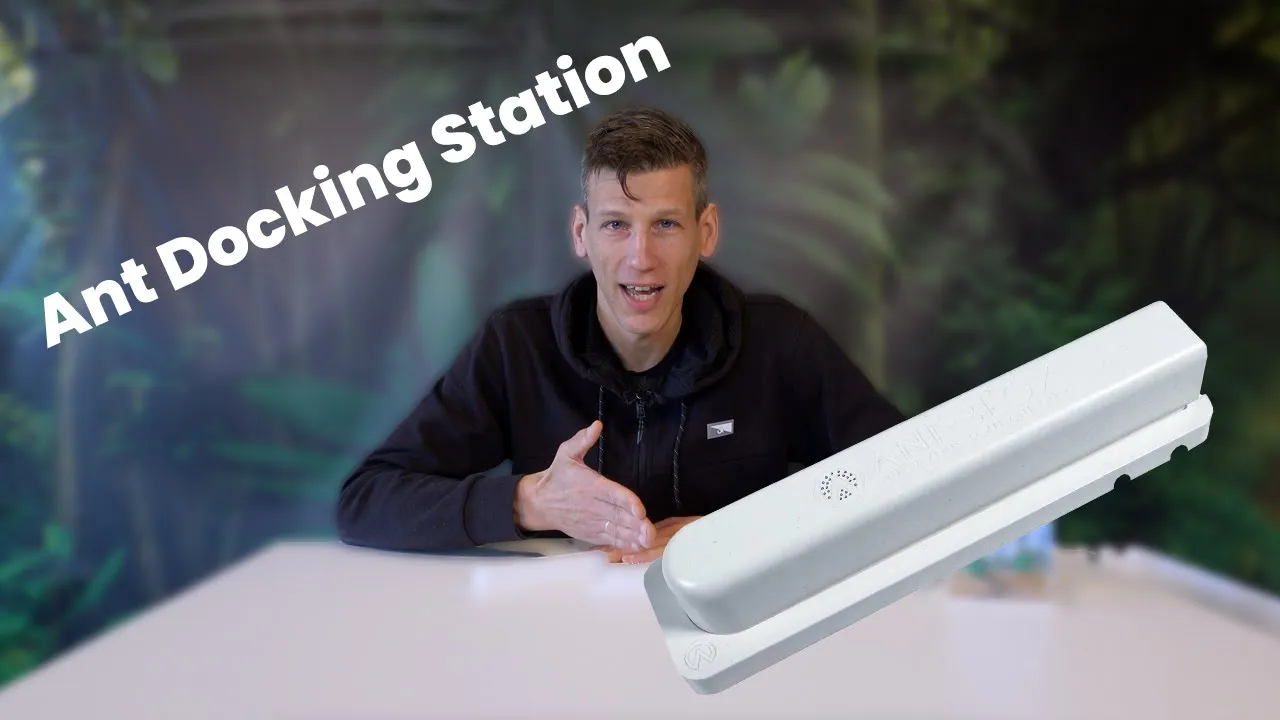
The biggest challenge of the hobby is getting started. How do you ensure that your queen, with a few workers, grows into a healthy, large colony? The 'Ant Dock Station' in combination with the arena makes this much easier.
In addition to the excellent shelter and robust character of the 'Ant Dock Station', you can now also provide your ants with the correct temperature. At the end of the Dock, there is a recess where the 1-meter heating cable fits precisely (optional to order separately). By correctly positioning the heating cable, you can provide the test tube with your ant colony with the correct temperature. Now your ants will be nice and warm, even during the cold periods of the year! With the right temperature, your colony will grow the fastest, and that's what you want!
The Dock where you place the test tube can thus be seen as the nesting area, which is normally underground. Warmed by the sun, protected by the earth, and ventilated for the ants. This is all incorporated into the Dock. The Arena is the above-ground part. In this outdoor living area, which the ants can access via the transport tube, the ants can collect their food (which you place there once a week) and dispose of their waste.
How cool is it to be able to closely follow the ants' cooperation and the transport through the tube.
This starter set is suitable for all types of ants. Don't have a colony yet? Then you can choose from different types above, including food, and order them at great promotional prices. The heating cable and arena setup can also be ordered above.
Contents of the set
- Ant Dock Station
- Town Square Arena (15x10x9cm)
- Ant-Blox test tube connector
- Stopper cap
- Connection hose
- Instructions in the video and on our YouTube channel
- Printed booklet 'Ants are heroes' with instructions on how to properly start the hobby of keeping ants as pets

Antskingdom.com
📍 Laan van de ram 64B
7324 BV Apeldoorn
💬 WA +31 85 888 9797
✉️ E: info@antskingdom.com
Chamber of Commerce no: 82353050
VAT no: NL862430744B01
Antskingdom.com
📍 Laan van de ram 64B
7324 BV Apeldoorn
💬 WA +31 85 888 9797
✉️ E: info@antskingdom.com
Chamber of Commerce no: 82353050
VAT no: NL862430744B01